
Acute Wound Care
Fast, expert care for sudden injuries and surgical wounds. Our team provides comprehensive treatment to promote optimal healing and prevent complications.
When to Seek Acute Wound Care
While many minor wounds heal on their own, some require professional care to ensure proper healing and prevent complications. Seek specialized wound care when you experience:
- Deep cuts or puncture wounds
- Wounds that won't stop bleeding
- Signs of infection (redness, swelling, drainage)
- Wounds with debris that can't be cleaned at home
- Surgical incisions that aren't healing properly
- Burns larger than your palm
- Wounds in people with diabetes or immune issues
Post-Surgical Wounds
Care for surgical incisions that aren't healing properly or have become complicated.
Traumatic Injuries
Treatment for wounds from accidents, falls, or other traumatic events.
Burns
Specialized care for thermal, chemical, and electrical burns of varying degrees.
Lacerations & Abrasions
Expert treatment for cuts, scrapes, and skin tears that need professional attention.
Our Acute Wound Care Services
Comprehensive care from initial treatment through complete healing.
Advanced Diagnostic Technology
We leverage cutting-edge multimodal imaging to uncover hidden barriers to healing, precisely measure wounds, and optimize your treatment plan—leading to faster recovery and better outcomes.
Fluorescence Imaging
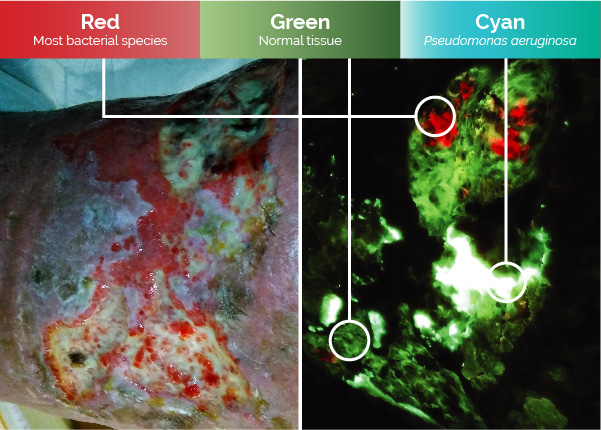
Pathogenic bacteria like Staphylococcus emit red fluorescence and Pseudomonas emits cyan, while healthy tissue appears green.
Thermal Imaging
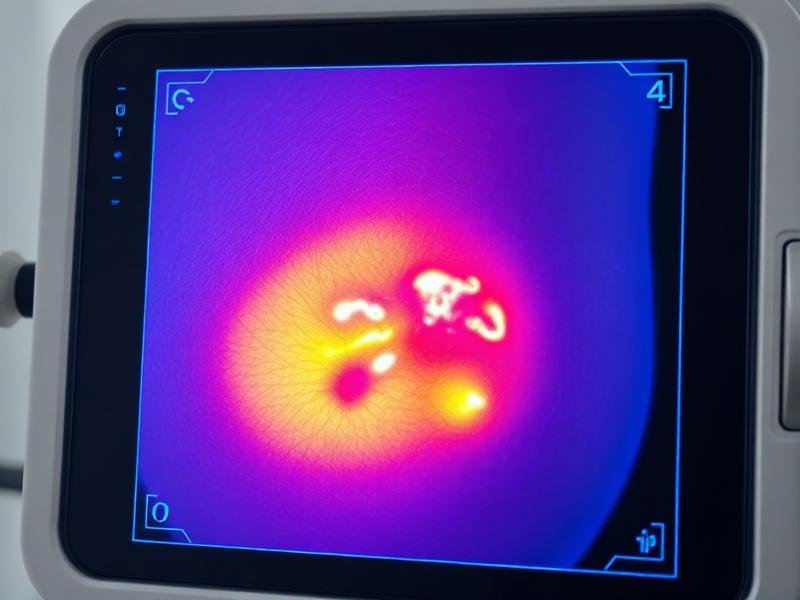
Heat mapping identifies inflammation and infection hotspots beneath the wound surface.
Fluorescence Imaging
Real-time, non-invasive, contrast-free detection of harmful bacteria using safe violet light (405nm). Bacteria fluoresce in distinct colors—red for Staphylococcus and cyan for Pseudomonas—allowing immediate visualization of bacterial burden invisible to the naked eye.
- Detects bacteria before clinical signs appear
- Guides precise debridement and treatment
- No contact required—completely non-invasive
Thermal Imaging
Quantify skin temperature differences with precision accuracy to identify inflammation, infection hotspots, and compromised tissue perfusion that standard assessment may miss.
- Maps inflammation patterns in real-time
- Identifies subclinical infection areas
- Tracks healing progress objectively
Tissue Oxygenation
Transcutaneous oximetry (TCOM) measures oxygen levels in wound tissue to predict healing potential, assess perfusion, and determine candidacy for advanced therapies like HBOT.
- Predicts wound healing potential
- Guides vascular intervention decisions
- Monitors response to oxygen therapy
AI-Powered Analysis
Automated wound measurement with validated digital precision. AI algorithms track wound area, depth, tissue composition, and healing progression over time for objective outcomes documentation.
- Eliminates measurement variability
- Tracks healing trajectory automatically
- Enables data-driven treatment decisions
How Fluorescence Imaging Works
Safe Violet Light
The device emits a safe 405nm violet light that excites bacteria and tissue to fluoresce in distinctive colors.
Bacteria Glow Distinct Colors
Pathogenic bacteria like Staphylococcus emit red fluorescence and Pseudomonas emits cyan, while healthy tissue appears green.
Targeted Treatment
Clinicians can precisely target bacterial colonies during debridement, ensuring thorough removal while preserving healthy tissue.
Proven Clinical Outcomes
Improvement in 12-week healing rates for diabetic foot ulcers using fluorescence-guided care
More wounds healed by 12 weeks when using bacterial imaging to guide treatment
Of treatment plans changed based on imaging findings in real-world clinical settings
Published randomized controlled trials demonstrate that removing harmful bacteria detected by fluorescence imaging leads to significantly better wound healing outcomes. Our multimodal imaging approach helps identify the hidden factors preventing your wound from healing—so we can address them effectively.
Post-Surgical Wound Care
Surgical wounds that fail to heal properly can lead to serious complications including infection, dehiscence, and prolonged recovery. Our wound care center provides specialized management for post-operative wounds that need expert attention.
- Surgical incision complications and dehiscence
- Post-operative infection prevention and treatment
- Skin graft and flap wound management
- Sternal wound complications after cardiac surgery
- Abdominal wound care following GI procedures
- Orthopedic surgical site wound management
We coordinate closely with your surgeon to ensure continuity of care and optimal outcomes, using advanced diagnostics to monitor healing progress and catch complications early.
When to Refer a Surgical Wound
Surgeons and primary care providers should consider referral when post-operative wounds show:
- No improvement after 2-4 weeks of standard care
- Signs of infection despite antibiotic therapy
- Wound dehiscence or breakdown along suture lines
- Underlying comorbidities complicating healing (diabetes, vascular disease)
Adjunctive Therapies
For surgical wounds that aren't responding to standard care, we offer hyperbaric oxygen therapy and platelet-rich plasma (PRP) to accelerate tissue repair and reduce healing time.
Advanced Healing with Platelet-Rich Plasma
For wounds that need an extra boost, we offer Platelet-Rich Plasma (PRP) therapy — a regenerative treatment that uses your body's own growth factors to accelerate tissue repair and reduce healing time.
Learn About PRP TherapyNeed Urgent Wound Care?
For life-threatening emergencies, call 911 or go to the nearest emergency room. For non-emergency wound care, contact us to schedule an appointment.
Schedule Appointment