
Chronic Wound Care
Expert treatment for wounds that haven't healed in 30 days or more. Our comprehensive approach addresses the underlying causes while promoting optimal healing conditions.
Conditions Treated
The Center treats patients with chronic non-healing wounds. Conditions treated include, but are not limited to:
- Diabetic wounds of the lower extremities
- Pressure ulcers
- Soft tissue radiation injuries
- Necrotizing infections
- Compromised skin grafts and flaps
- Burns
- Osteomyelitis
- Lymphedema
- Malignant wounds
- Venous leg ulcers
A Growing Need
In the United States, chronic wounds affect 6.7 million people and the incidence is expected to rise at two percent annually over the next decade.
An aging population and increasing rates of diseases and conditions such as diabetes, obesity and the late effects of radiation therapy contribute to the chronic wound epidemic.
Untreated, chronic wounds can lead to diminished quality of life and possibly amputation of the affected limb.
Understanding Chronic Wounds
A chronic wound is any wound that fails to heal within 30 days. These wounds often result from underlying conditions that impair the body's natural healing process, such as diabetes, vascular disease, or immune system disorders.
Without proper treatment, chronic wounds can lead to serious complications including infection, bone involvement, and in severe cases, limb loss. Our specialized team uses evidence-based protocols to address both the wound and its underlying causes.
Our Approach
- Comprehensive wound assessment and documentation
- Identification and treatment of underlying causes
- Advanced wound care products and therapies
- Coordination with vascular and other specialists
- Patient and family education
- Regular progress monitoring and plan adjustments
Types of Chronic Wounds We Treat
We specialize in treating all types of chronic wounds with individualized care plans.
Diabetic Foot Ulcers
Specialized care for diabetes-related wounds that won't heal, reducing risk of infection and amputation.
Treatment Options:
- Advanced wound dressings
- Offloading techniques
- Vascular optimization
- HBOT when appropriate
Venous Leg Ulcers
Treatment for wounds caused by poor blood flow in the veins, often on the lower legs and ankles.
Treatment Options:
- Compression therapy
- Venous optimization
- Specialized dressings
- Skin substitutes
Pressure Injuries
Care for bedsores and pressure ulcers, from early-stage to advanced wounds.
Treatment Options:
- Pressure redistribution
- Debridement
- Negative pressure therapy
- Nutritional support
Arterial Ulcers
Treatment for wounds caused by poor arterial blood flow, typically on feet and toes.
Treatment Options:
- Vascular evaluation
- Revascularization coordination
- Pain management
- Wound optimization
Advanced Wound Care Modalities
Our comprehensive treatment approach includes cutting-edge therapies proven to accelerate healing for chronic, non-healing wounds, including bio-engineered tissues, biosynthetic dressings, and growth factor therapies.
Offloading
Including total contact casting, reduces the pressure on the wound and increases the probability and speed of healing.
Interventions to prevent weight-bearing include boots, crutches, or wheelchairs.
Ultrasonic Debridement
State-of-the-art ultrasonic wound debridement for precise, gentle removal of dead tissue and biofilm.
Uses low-frequency ultrasound energy to selectively break down necrotic tissue while preserving healthy cells. Reduces bacterial burden, disrupts stubborn biofilm, and stimulates cellular activity to jumpstart the healing process — all with less pain than traditional methods.
Tissue-Growing Therapies
Help new skin cells develop by delivering living tissue directly to the wound.
Activates the body's inherent ability to repair and regenerate through new cell growth.
Hyperbaric Oxygen Therapy
Stimulates growth of new blood vessels and tissue with a pressurized, oxygen-rich environment.
Allows blood plasma to carry up to 20 times the normal amount of healing oxygen.
Negative Pressure Wound Therapy
Involves placing a vacuum over a dressed wound to accelerate healing.
Draws fluid from the body through the wound and stimulates blood flow to the wound.
Platelet-Rich Plasma (PRP)
Uses concentrated growth factors from the patient's own blood to restart stalled healing.
Modulates inflammation, promotes angiogenesis, and provides a fibrin scaffold for new tissue growth.
Learn more →
Advanced Diagnostic Technology
We leverage cutting-edge multimodal imaging to uncover hidden barriers to healing, precisely measure wounds, and optimize your treatment plan—leading to faster recovery and better outcomes.
Fluorescence Imaging
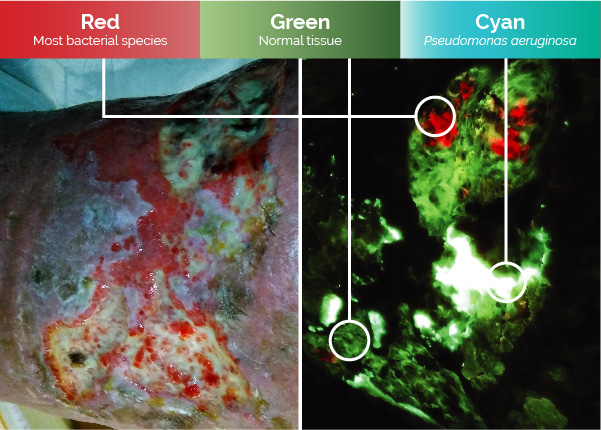
Pathogenic bacteria like Staphylococcus emit red fluorescence and Pseudomonas emits cyan, while healthy tissue appears green.
Thermal Imaging
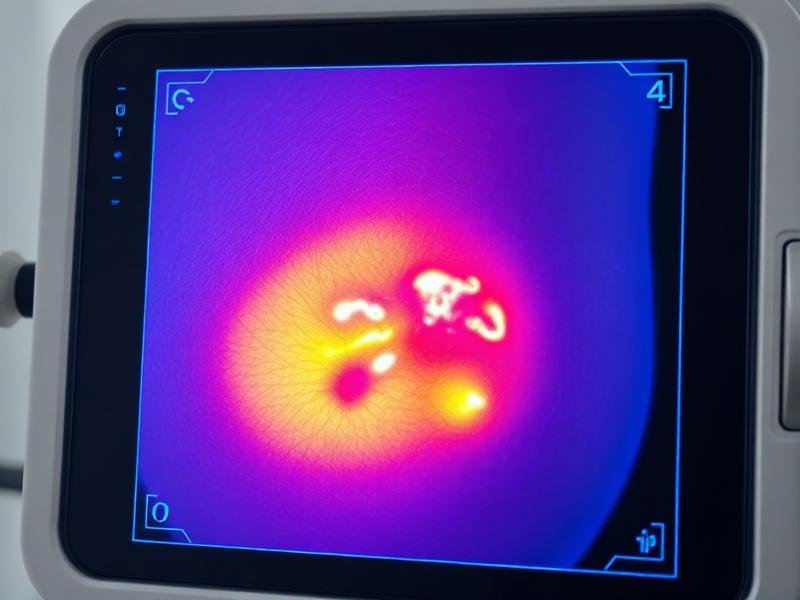
Heat mapping identifies inflammation and infection hotspots beneath the wound surface.
Fluorescence Imaging
Real-time, non-invasive, contrast-free detection of harmful bacteria using safe violet light (405nm). Bacteria fluoresce in distinct colors—red for Staphylococcus and cyan for Pseudomonas—allowing immediate visualization of bacterial burden invisible to the naked eye.
- Detects bacteria before clinical signs appear
- Guides precise debridement and treatment
- No contact required—completely non-invasive
Thermal Imaging
Quantify skin temperature differences with precision accuracy to identify inflammation, infection hotspots, and compromised tissue perfusion that standard assessment may miss.
- Maps inflammation patterns in real-time
- Identifies subclinical infection areas
- Tracks healing progress objectively
Tissue Oxygenation
Transcutaneous oximetry (TCOM) measures oxygen levels in wound tissue to predict healing potential, assess perfusion, and determine candidacy for advanced therapies like HBOT.
- Predicts wound healing potential
- Guides vascular intervention decisions
- Monitors response to oxygen therapy
AI-Powered Analysis
Automated wound measurement with validated digital precision. AI algorithms track wound area, depth, tissue composition, and healing progression over time for objective outcomes documentation.
- Eliminates measurement variability
- Tracks healing trajectory automatically
- Enables data-driven treatment decisions
How Fluorescence Imaging Works
Safe Violet Light
The device emits a safe 405nm violet light that excites bacteria and tissue to fluoresce in distinctive colors.
Bacteria Glow Distinct Colors
Pathogenic bacteria like Staphylococcus emit red fluorescence and Pseudomonas emits cyan, while healthy tissue appears green.
Targeted Treatment
Clinicians can precisely target bacterial colonies during debridement, ensuring thorough removal while preserving healthy tissue.
Clinical Evidence: Why It Matters for Chronic Wounds
Improvement in 12-week healing rates for diabetic foot ulcers using fluorescence-guided care
More wounds healed by 12 weeks when using bacterial imaging to guide treatment
Of treatment plans changed based on imaging findings in real-world clinical settings
Published randomized controlled trials demonstrate that removing harmful bacteria detected by fluorescence imaging leads to significantly better wound healing outcomes. Our multimodal imaging approach helps identify the hidden factors preventing your wound from healing—so we can address them effectively.
Don't Wait for Your Wound to Heal on Its Own
Early intervention leads to better outcomes. If you have a wound that hasn't healed in 30 days, schedule a consultation with our wound care specialists.
Request Consultation